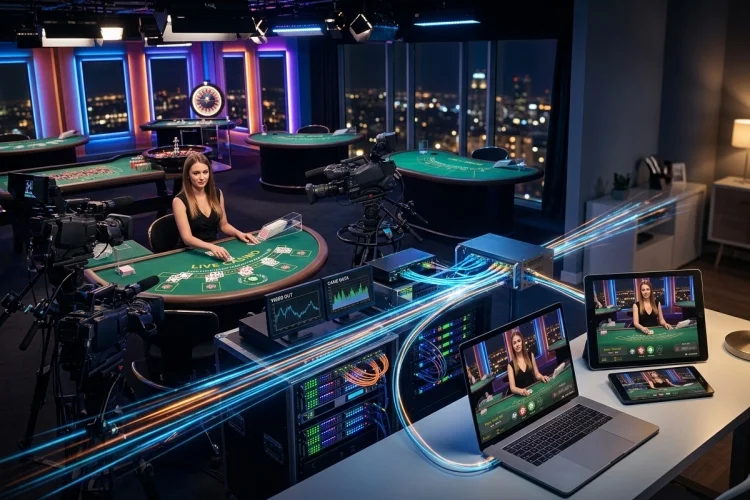
Unlike digital slots or automated table games, most live dealer tables do not rely on an animation to create the visible result.
A real dealer handles physical cards, spins a roulette wheel, or manages another piece of gaming equipment while cameras broadcast the action. This can make live games feel more transparent, but the video feed is only one part of the system.
Behind the table, technology must record bets, recognize cards, synchronize the stream, transfer results, update balances, and maintain a detailed history of every round.
So, are live dealer games fair? They can be when the entire chain – from the physical studio to the player’s screen – is licensed, tested, monitored, and independently auditable.
A trustworthy setup must prevent unauthorized access, reduce opportunities for cheating, and ensure that the displayed result matches what happened at the table.
This guide explores the technology behind live casino games and explains why testing must cover much more than the dealer.
Physical Results Versus RNG Results
In many traditional live blackjack, baccarat, and roulette games, the result comes from a physical event. Cards leave a shoe or a ball lands in a numbered roulette pocket.
This differs from many automated online games, where a random number generator directly determines the outcome. Gaming Laboratories International explains that live dealer results are based on real-life actions rather than an automated RNG outcome-determination process.
Some live-style products may still include digital elements or RNG-based bonus features. Players should read the rules to determine exactly how each component works.
How OCR Connects the Table to the Software
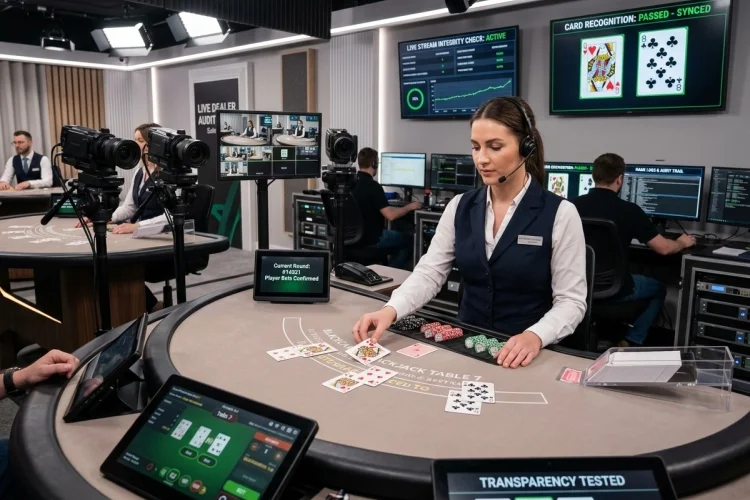
Optical character recognition, commonly shortened to OCR, helps translate physical game information into digital data. Card values, roulette results, or other table events can be recognized and sent to the casino platform.
This allows the interface to display the current hand, betting result, and account settlement. GLI specifically notes that OCR technology can convert physical dealer transactions into data used by live gaming software.
OCR does not make the cards random. Its purpose is to identify and communicate what has already occurred at the physical table.
Why Synchronization Is Important
A live game includes several processes occurring almost simultaneously. The video must match the betting timer, dealer action, recognized outcome, account record, and final settlement.
If the stream reaches the player late while the system receives data on time, the visual experience may appear confusing. For this reason, testing can examine synchronization between video, software, and table events.
GLI includes synchronicity tests within its live dealer evaluation process, alongside technical, staffing, premises, responsibility, and system tests.
A stable platform should close betting before the result is known and should prevent late wagers from being accepted.
What Independent Laboratories Examine
A studio inspection can review much more than cards and cameras. Testing may cover licences, physical security, staff access, dealer training, shuffling, wheel procedures, network infrastructure, video quality, game rules, and responsible-gambling controls.
eCOGRA states that live dealer testing includes assessments of gameplay integrity, streaming quality, fraud prevention, technical infrastructure, recordkeeping, dispute procedures, and continuous monitoring.
Laboratories can also conduct remote testing of the player interface and on-site inspections of the studio. Together, these evaluations help confirm that physical and digital components work consistently.
How Human Errors Are Handled
Human dealers can make mistakes even in well-managed studios. A card may be scanned incorrectly, dealt prematurely, or placed in the wrong position.
Fairness depends on having clear procedures for such situations. Supervisors should be able to pause the game, review camera footage, correct recognized values, or void a round when the applicable rules require it.
The official result should be based on documented procedures and evidence, not an improvised decision. Players should be able to find general information explaining how misdeals, equipment failures, and connection interruptions are settled.
Security Against Cheating and Unauthorized Access
Studios need controls to protect cards, wheels, shoes, scanners, databases, and restricted areas. Only authorized personnel should have access to sensitive equipment and operational systems.
UK live dealer guidance calls for access controls over secure areas, gaming equipment, and consumable materials. It also expects designated staff to monitor equipment integrity.
Testing organizations may review authentication, fraud prevention, collusion risks, surveillance coverage, and system security. The aim is to make manipulation detectable and difficult to perform.
Does Video Streaming Prove Fairness?
Watching the dealer can increase transparency, but a video alone is not complete proof. A dishonest website could display prerecorded or misleading material while operating outside regulatory oversight.
The stronger evidence is a combination of licensing, independent inspection, published rules, secure systems, surveillance, and accessible transaction records. The operator should identify the game provider and explain where complaints can be submitted.
Players should also consider streaming quality. A delayed or frozen picture does not necessarily mean that the round was manipulated, but repeated unexplained discrepancies should be reported and investigated.
Fairness Does Not Remove the House Advantage
A live roulette wheel can be operated honestly while still favoring the casino mathematically. The same is true for live baccarat, blackjack, and game-show products.
The house advantage comes from rules and payouts, not necessarily from hidden manipulation. Optional side bets may have a larger mathematical disadvantage than the main wager.
Players should compare table variations carefully. A blackjack table paying 3:2 for a natural blackjack is different from one paying 6:5, even when both dealers follow the rules perfectly.
Live dealer fairness depends on a complete system. Physical equipment produces the game event, OCR and other technologies transfer the result, synchronized software settles bets, and surveillance or logs preserve evidence.
Independent testing may examine the dealer, premises, streaming quality, technical systems, access controls, and operational procedures.
These safeguards make regulated live gaming more transparent, but they do not eliminate the house advantage or guarantee winnings.
Before playing, verify the licence and provider, review the table rules, and check how disputed or interrupted rounds are handled. Use only an affordable entertainment budget and stop when your predetermined time or spending limit is reached.